
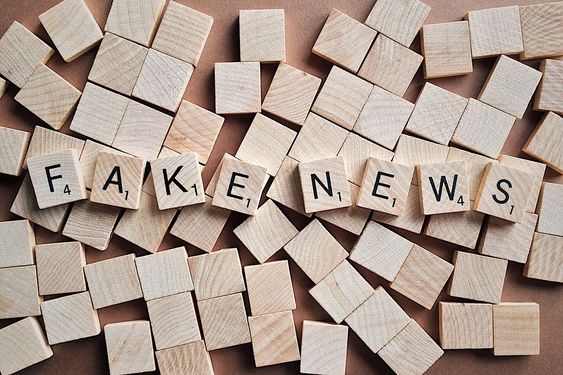
There are many ways to spot fake news on the internet, look for typos, fake news companies, and outright false or outlandish stories. However, it has gotten more challenging to separate fact from fiction. Many fake news websites continue to pop up, with major news stations sometimes putting them on air before realizing that the story is not true.
It is no secret that one of the biggest media platforms to spread fake news is Facebook. Studies have found that Facebook spreads fake news the fastest as people can click and share information in mere seconds. Facebook found itself in trouble when people were being shown untrustworthy news, often at a higher rate than the real story. Facebook has now made it a point to moderate the content being spread around Facebook. Major internet platforms like google are pulling ad-cents from fake news websites so that the posts’ financial incentive goes away.
The last two presidential elections often struggled with fake news and its ability to influence voters and spread false information about the Candidates. The 2016 Presidential election has repeatedly come under fire for the volume of fake news circulated about Democratic nominee Hilary Clinton, with some stories ending up on TV news. While there are no set statistics about how many people were influenced by fake news during the 2016 election, it is apparent that it did have a much more significant effect than it had in the past.
Fake news is a problem as it makes people distrust all types of information. Simultaneously, it is essential to double-check news sources and do additional research; people should not assume that legitimate news sources lie. Even when fake news stories are debunked, the articles often do not gain the same traction as the initial story, which means the damage done cannot always be reversed. The problem with stopping fake news is that it comes from many places and many websites.
The fake news from the 2016 election primarily came from Macedonia, where young adults were posting fake stories to make money. One of the most significant fixes to stop fake news has been spearheaded by Google is to take the money out of this business, as that is the only reason many people are taking part in this phenomenon.
Unfortunately, it is primarily up to moderators and platforms to take down fake news and keep it from popping back up; however, this is no easy task. Some fake newsgroups can spit out thousands of stories a day using programming software, and those trying to stop it cannot always keep up with the demand. People need to remain vigilant about the information they come across online. Check your source to see if it is a legitimate news site, not a knockoff; google the story and see if other major sites are reporting on it. There are also websites like Snopes who fact-check news stories.
 Katie's Blog