
Twitter is a wonderful way for journalists and public relations professionals to interact with the public directly. It is also beneficial to live-tweet information or events to get the story or information out to the public the fastest. There are many social media platforms that people in these professions should use to grow their following, but Twitter is arguably the most useful for quick responses and reactions. Those who know how to use Twitter have developed significant followings and amass substantial retweets that have put them on the trending page and spread to new followers.
It would be a good idea for all journalists to use Twitter along with their more traditional methods. Many breaking news stories have first found their way to Twitter and then onto news websites or broadcasts, as tweets can be sent out much quicker than any other method. When journalists work on a story, they can also tweet out that they are looking for people who have information on what they are working on or witnesses to events. It is easier than ever for journalists to connect with the public and gather information by using Twitter. Twitter can also help drive traffic to stories that journalists have written which can also help share the report or information with new readers.
The power of witty or funny tweets by journalists can gain many retweets and views and help push viewers to their articles or attract followers who get their news from Twitter accounts. Many younger Americans have shifted from watching the news on the TV or reading newspapers and instead get most of their news from Twitter. Many brands and news sites have gained attention on Twitter by tweeting shocking statements, like the recent Burger King tweet about women belonging in the kitchen. While these types of tweets tend to gain public notice, but not always for the right reasons and often do not always receive positive responses. So while this is an option, tread lightly when using the shock factor to gain attention.
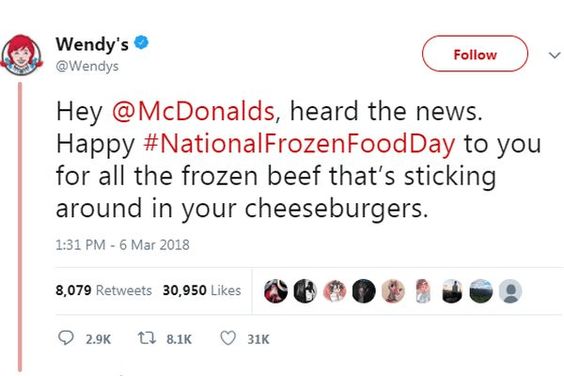
Some companies and brands have used Twitter as a funny way to bicker with brands that are their competitors and interact directly with consumers. One of these companies is Wendys, the fast-food chain, which has used Twitter for witty and funny comebacks, attracting significant attention. They have used their companies twitter to shade competitors, who often do not have the same twitter use, leaving Wendy’s looking intelligent and relevant and their competitors washed up and boring.
The main point is that journalists and public relations should use Twitter and be relevant, as it can significantly boost brand support and recognition.
 Katie's Blog